NAXOS ARCHAEOLOGY
Prehistoric & Paleolithic
Stelida — The oldest archaeological find on the island, and among the oldest in Greece, was located here: pyrite processing workshops from the Middle and Upper Paleolithic period, dating to roughly 80,000–10,000 BC.
Grotta (Prehistoric Settlement) — A larger and much more developed settlement, with meticulously built houses and numerous pottery items, was discovered at Grotta, where Chora stands today. Naxos emerges from archaeological research as one of the most important centers of the Proto-Cycladic civilization.
Early Cycladic (3rd Millennium BC)
Aplomata Cemetery — This site has yielded Early Cycladic pyxides of marble and schist, as well as Mycenaean grave goods including a jar decorated with an octopus design. A Roman-era mosaic floor depicting a Nereid on a bull was also found here.
Kamini Cemetery — A Mycenaean jug decorated with a circular dance scene, and four golden plaques from a child burial, were retrieved from this cemetery.
Korphi t'Aroniou — An excavated site in eastern Naxos that has contributed finds now housed in the Archaeological Museum.
Tsikalario — Golden jewelry from tombs here has been dated to the Geometric period.
Mycenaean Period (c. 1300 BC)
Grotta (Mycenaean City) — Excavation work has led to the discovery of part of Naxos's Mycenaean-era capital, dated to 1300 BC, on the northern side of the harbor, below Mitropoleos Square. The section discovered constitutes part of the ancient agora and settlement. Some ancient constructions are seen submerged in the sea today.
Mycenaean Tomb at Chosti — The Mycenaean tomb at Chosti is an important and rare monument in the Cyclades, being one of only three vaulted tombs discovered in the region.
Mycenaean Tombs at Aplomata / Eggares — In the Eggares region, near the area of Aplomata, visitors can see the remains of Mycenaean tombs.
Archaic Period (7th–6th Century BC)
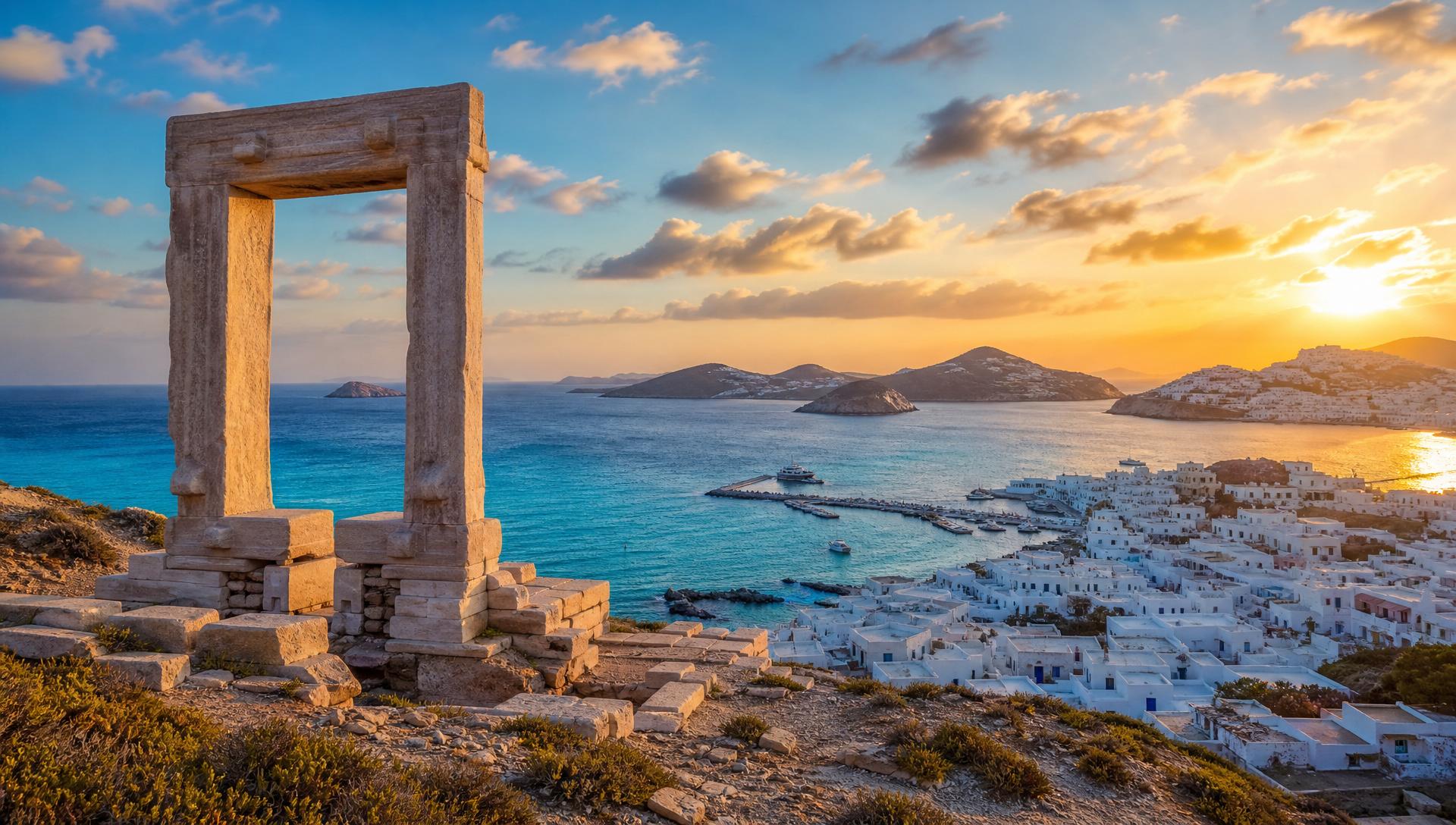
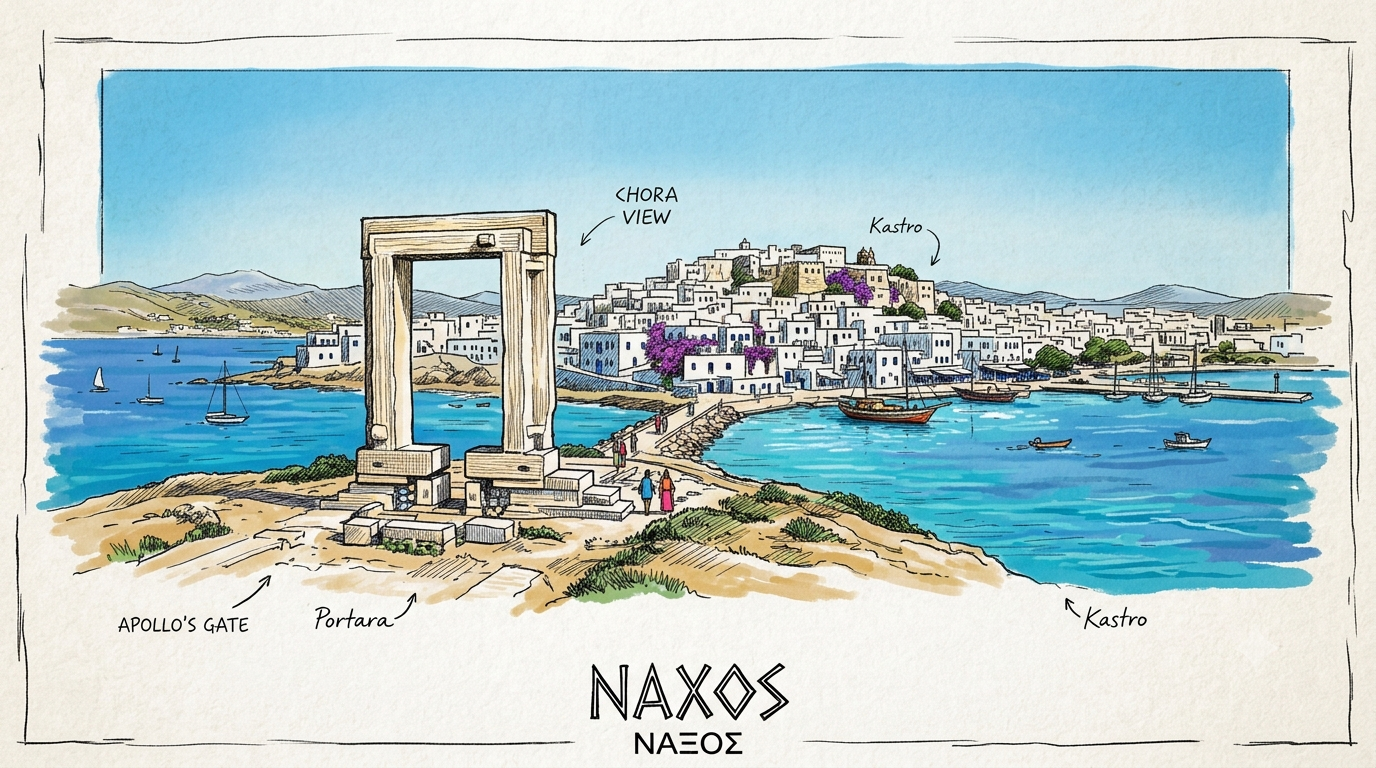
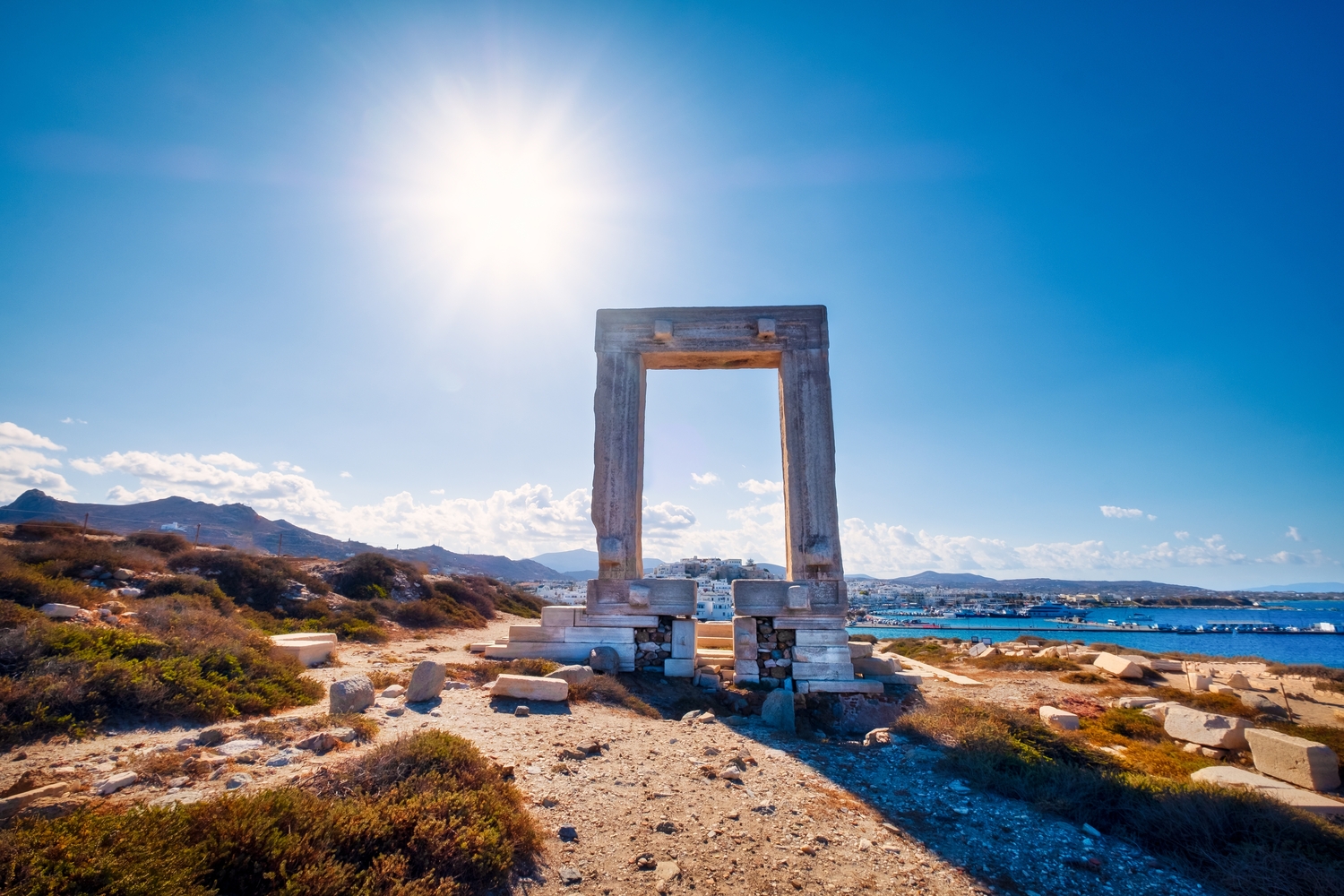
The Portara (Temple of Apollo) — Construction began around 530 BC under the tyrant Lygdamis, intended to be grander than any other temple in Greece. The massive marble doorway is all that remains of this unfinished Temple of Apollo.
Temple of Demeter, Sangri — A Late Archaic Greek temple built around 530 BC, it represents one of the earliest buildings in the Ionic order and was constructed entirely of local marble.
Sanctuary of Dionysus at Yria — One of the most important sanctuaries of ancient Naxos, dedicated to Dionysus and possibly a female deity of nature, operated at Yria, south of Naxos Town, in the middle of the fertile plain.
Kouros of Apollonas — Located in the Kastraki region near the village of Apollonas, this unfinished statue is 10.45 metres long and dates to the 6th century BC.
Kouros of Flerio (Melanes) — Another unfinished kouros situated near the village of Melanes, dating to the 7th century BC and measuring 6.40 metres long.
Marble Quarries of Flerio — The area around Flerio, rich in thick surface layers of good quality marble, was the cradle of the development of Greek marble architecture and sculpture.
Marble Quarries of Apollonas — One of Naxos's two main marble quarrying areas in antiquity, the locale is replete with remnants of quarrying activity.
Gyroulas — An ancient sanctuary from which an offering vessel with inscription dated to the late 7th century BC has been recovered, now displayed in the Archaeological Museum.
Panormos — An excavated ancient site whose finds are now housed in the Archaeological Museum of Naxos.
Classical, Hellenistic & Roman Periods
Ancient Aqueduct (Barou–Kaminia) — The entry and exit points of the underground tunnel of the ancient Naxos aqueduct were discovered at the positions of Barou and Kaminia respectively after copious excavations — an important feat of ancient engineering.
Aplomata Roman Villa — The site also yielded a Roman-era mosaic floor, fragments of which are displayed in the Archaeological Museum.